Why St. Augustine is the default Florida lawn
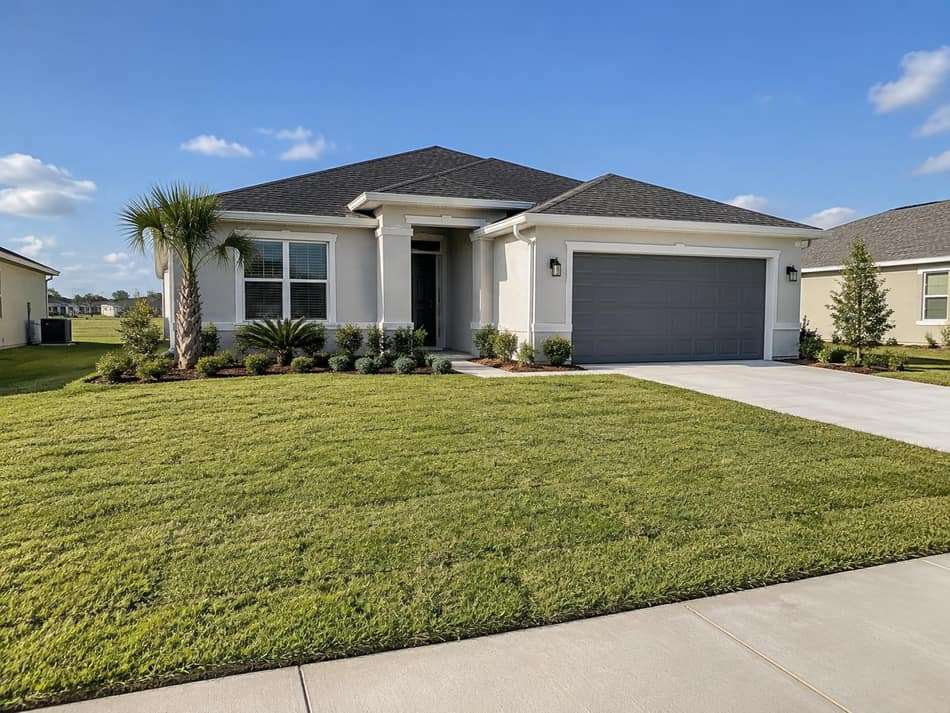
St. Augustinegrass is the most commonly used lawn grass in Florida, according to UF/IFAS Extension, and it is the grass on most Polk County lots. UF/IFAS describes it as a green to blue-green, dense turf that is well adapted to most Florida soils and climates, with relatively good salt tolerance and, in certain varieties, better shade tolerance than other warm-season grasses. It establishes quickly and easily from sod, sprigs or plugs.
It also has real drawbacks, and a good care plan starts by knowing them. The same UF/IFAS publication says St. Augustine needs water to stay green and may need extra irrigation in long dry spells, has poor wear tolerance and does not stand up to repeated foot or vehicle traffic, goes dormant and turns brown or tan in winter in parts of the state, and builds thatch under heavy fertilizing and watering. Its coarse, wide leaves also mean it does not grow as densely as some other species. If those trade-offs are a problem for your yard, read Bahia vs. St. Augustine Grass in Florida or St. Augustine vs Bahia vs Zoysia in Polk County before you commit.
St. Augustine varieties: Floratam, Palmetto, Seville and the rest
UF/IFAS groups St. Augustine varieties, called cultivars, by mowing height and leaf texture. Standard cultivars are mowed at 3.5 to 4 inches and dwarf cultivars lower, around 2 to 2.5 inches. Cultivars also differ in cold tolerance, shade tolerance and pest and disease susceptibility, so the label on the sod pallet matters.
Floratam is the most widely produced and used St. Augustine in Florida. UF/IFAS calls it coarse-textured with poor cold and shade tolerance compared with other cultivars, and says it does not persist well where it gets less than six hours of sun a day. It was released in 1973 with documented chinch bug resistance, but UF/IFAS says that resistance has largely been lost over time and chinch bugs are now a major pest of Floratam. It is also susceptible to gray leaf spot and other diseases, and UF/IFAS says Floratam is not tolerant of atrazine herbicides applied above 85 degrees Fahrenheit.
Palmetto is a semi-dwarf selection found by a Florida sod grower in 1988. UF/IFAS says it does well in full sun or partial shade but not in dense shade, has a lighter green color, is mowed at 3 to 4 inches, is not resistant to insects and sometimes has disease problems in humid weather. It adds that Palmetto is sometimes called drought tolerant, but research has not shown it to be more drought tolerant than other St. Augustine cultivars.
Seville is a fine-leaved, dark green dwarf with a low growth habit, mowed at 2 to 2.5 inches. UF/IFAS says it does well in both shade and full sun but is cold sensitive, is susceptible to chinch bug and webworm damage, and, like other dwarfs, tends to be prone to thatch. UF/IFAS also lists Bitterblue (fine, dense, dark blue-green, good cold and shade tolerance), Classic (a proprietary cultivar with good cold tolerance, whose shade tolerance UF/IFAS says has not been verified by university research), Raleigh (cold-hardy, mainly used in north Florida, susceptible to chinch bugs and large patch), ProVista (Floratam-based, with better shade tolerance and slower growth) and CitraBlue (a UF-developed, blue-green cultivar on the market since 2018 that UF/IFAS says is more drought tolerant than Floratam, Palmetto and Raleigh and does not seem to suffer disease as severely). Availability varies by grower, so ask which cultivars a supplier actually stocks.
Sun, shade and cold in a Polk County yard
Match the cultivar to the light on your lot before you match it to a name. A yard under mature oaks and a yard in full sun on a lake lot need different grasses, and UF/IFAS notes that excessive shade, compacted soil, over- or underwatering, improper mowing, traffic and high or low pH can all make a lawn perform poorly. Shade is also a reason the same lawn can look healthy in one corner and thin in another. If part of the yard gets under about six hours of sun, UF/IFAS information on Floratam suggests that is the wrong cultivar for that spot.
Cold matters less in Polk County than in north Florida, but it is not zero. UF/IFAS rates Seville as cold sensitive and Floratam as poor for cold tolerance. It also advises against planting during cold winter weather in central and north Florida, especially if freezing temperatures are forecast, and says brown winter grass is not necessarily a sign of a problem, because St. Augustine goes dormant in winter across much of the state.
Mowing height and routine
UF/IFAS recommends mowing standard St. Augustine cultivars such as Floratam and Bitterblue at 3.5 to 4 inches with a rotary mower, and dwarf cultivars at 2 to 2.5 inches. Repeatedly mowing lower stresses the lawn, discourages deep rooting, raises the chance of scalping if a mowing is missed and may increase susceptibility to pests. Remove no more than a third of the leaf blade at one mowing, and raise the height in dry spells or in shade. UF/IFAS adds that lawns kept up with robotic mowers, which trim tiny amounts constantly, can tolerate lower heights, and that research showed Floratam could be held at 2.4 inches year-round with no negative effects.
St. Augustine typically needs weekly mowing during the growing season and less often in cooler months. Keep blades sharp, since dull blades shred the leaf and leave a brownish cast, and UF/IFAS suggests sharpening monthly in the growing season. Leave clippings on the lawn at the right height and frequency, because UF/IFAS says they break down quickly, return nutrients and do not cause thatch. Mowing too infrequently, or mowing too high, along with overwatering and overfeeding, does contribute to thatch.
Watering an established St. Augustine lawn
UF/IFAS recommends watering an established lawn as needed and not on a fixed calendar. The signs that a lawn is ready for water are leaf blades that fold up, wilt or turn blue-gray, or footprints that stay visible after you walk across the grass. When it is time, apply one-half to three-quarters of an inch per application, which wets roughly the top 8 inches of soil where most roots are. UF/IFAS says to change how often you water with the seasons, with less in fall and winter, and not the amount per watering.
In Polk County, how often you may water is set by rules, not by the lawn. Polk County Utilities customers have been under a once-a-week schedule tied to the last digit of the street address under a Southwest Florida Water Management District shortage order, but orders change, cities and other utilities have their own schedules, and the schedule has an end date set by the district and county, so check the county page for the current one and our guide to Polk County Watering Days & Irrigation Rules for your address. Under a one-day limit, even coverage matters more than long run times. UF/IFAS describes a simple catch-can test, setting straight-sided cans across each zone and timing how long each takes to fill to a half or three-quarters of an inch, and our guides How to Adjust Sprinkler Heads: Rotors and Spray Heads and How to Replace a Sprinkler Head: Steps and Fixes cover the repairs that test usually points to.
More water is not safer. UF/IFAS says that when large patch or gray leaf spot keep coming back, excessive watering and nitrogen may be responsible, and that weeds such as dollarweed and sedges thrive in soils that stay wet.
Fertilizing: what UF/IFAS says and what Polk County restricts
Fertilizing is where lawn advice most often goes wrong. UF/IFAS says St. Augustine needs proper nutrition for good cover and growth, and publishes annual nitrogen ranges by region of the state, with a separate range for Central Florida. Read the current table for the amounts instead of relying on a number from a website. As a general rule it puts the first application of the year in early April in central Florida, says not to fertilize too late in the year after growth slows, and its Gardening Solutions page tells Central and North Florida owners to reduce watering and not to fertilize in the cool months. It also says a new lawn should not be fertilized until 30 to 60 days after planting, since sod is generally fertilized before it is harvested.
On local rules, be careful about what you repeat. According to the UF/IFAS Extension Polk County residents guide, the county ordinance bars fertilizer within 10 feet of a water body or wetland, caps each application at 1 pound of slow-release or 0.5 pound of water-soluble nitrogen per 1,000 square feet, bars nitrogen and phosphorus before seeding or sodding and for 30 days after, and bars them in severe weather or when more than 2 inches of rain is likely within 24 hours. That guide does not give a Polk summer blackout, though some cities and nearby counties do have summer bans, and a city inside Polk may have its own rule, so check your city. Our guide Florida Fertilizer Ban: What Polk County Allows explains what Polk County restricts.
Fertilizer and iron are not interchangeable. UF/IFAS states that iron is not a substitute for nitrogen, that iron does not cure yellowing from a nitrogen shortage, and that yellow blades on high-pH soils above 7.0 may signal an iron or manganese deficiency. St. Augustine Grass Turning Yellow: Causes and Fixes shows how to tell which problem you have before you buy anything.
Common problems and where to read more
The major insect pest of St. Augustine is the southern chinch bug, which sucks plant juices and causes yellowish to brownish patches. UF/IFAS says damage is usually first noticed as the weather warms, along sidewalks, next to buildings and in other water-stressed, full-sun areas. The Gardening Solutions page adds that chinch bugs can cause damage year-round, and that non-chemical steps include reducing thatch and minimizing fertilizer. UF/IFAS describes the coffee can test: cut both ends off a can, push it into the soil at the edge of the damage, fill it with water and watch for chinch bugs floating up within about five minutes. Our guide Chinch Bugs in Florida Lawns: How to Spot and Stop Them covers identifying, treating and preventing them. Some populations have become resistant to pyrethroid insecticides, which is one reason to read current guidance before treating.
Diseases are the other big category. UF/IFAS names large patch and gray leaf spot as the two major diseases, with large patch encouraged by warm, humid weather and excessive nitrogen, and gray leaf spot appearing in the summer rainy season mostly on new growth. It also names take-all root rot, which occurs under high moisture or stress, and says that by the time symptoms show aboveground the disease is usually advanced. For symptoms and look-alikes, see Brown Patch, Take-All Root Rot and Gray Leaf Spot.
UF/IFAS also lists mole crickets, white grubs, webworms, armyworms and grass loopers as insect problems, and nematodes as a root problem. Nematode levels can only be positively identified through lab tests, which the Extension office can help arrange, and UF/IFAS says control products for home lawns exist but are costly, so cultural steps such as raising the mowing height and watering less often but more deeply matter.
Thatch, weeds and soil
Thatch is the layer of undecomposed stolons, roots and crowns between the soil and the green blades. UF/IFAS says it is greatest in grass that is overfertilized or overwatered, and that a thick layer reduces water penetration and can bind fertilizer and pesticides. If it exceeds an inch, UF/IFAS says it can be removed by vertical mowing in early spring to midsummer while the grass is actively growing, though the lawn then needs time to recover. For most owners the better answer is prevention, because dethatching is hard on the grass.
On weeds, UF/IFAS says the best approach is a healthy, vigorous lawn, and that weeds are often a sign the turf has been weakened by improper management or pests. If a herbicide is needed, it should be labeled specifically for St. Augustinegrass, and UF/IFAS cautions that weed-and-feed products can damage landscape plants whose roots extend under the lawn. Always follow the label.
Before you plant or if you buy a home with an existing lawn, UF/IFAS recommends a soil test for pH and salinity. The local Extension office has instructions and supplies for sending a sample to the UF/IFAS lab.
Installing or replacing St. Augustine sod
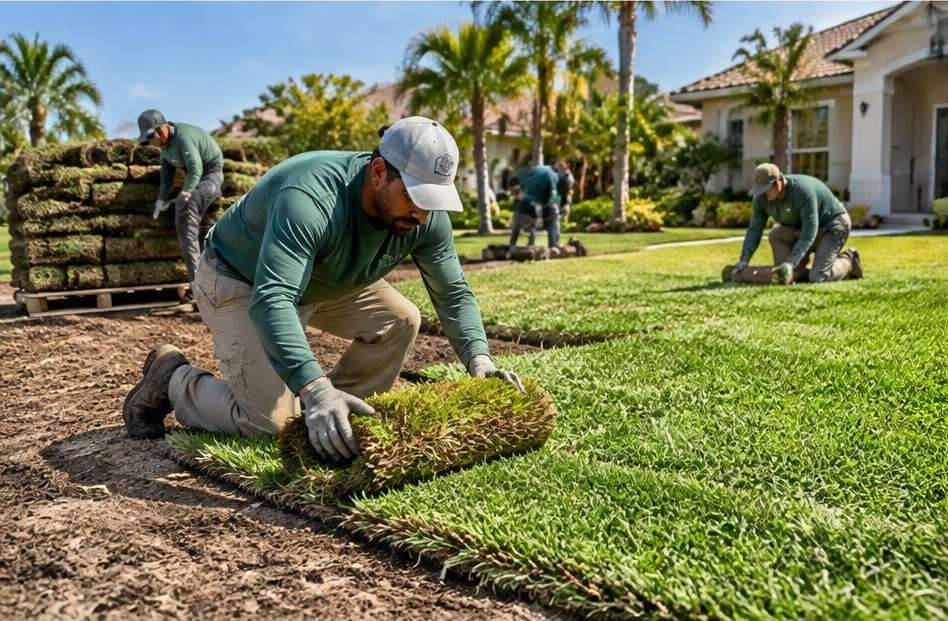
St. Augustine is spread only by vegetative propagation, meaning sod, plugs or sprigs. UF/IFAS calls sodding the fastest way to establish a lawn because it gives complete ground cover and cuts weed competition, though the new grass is still vulnerable and not yet safe for play. Sprigging is less expensive but takes longer to fill in, and plugs are planted 6 to 24 inches apart, with closer spacing covering faster. UF/IFAS says St. Augustine can be planted year-round in warmer parts of the state, but the best time is during active growth, and in central Florida you should avoid cold winter and hot, dry summer months. Our guide When to Install Sod in Central Florida covers timing for Polk County.
UF/IFAS gives a few firm rules for the early weeks: keep new sod from drying out, do not fertilize for 30 to 60 days, and wait to mow until the roots have pegged down, generally 14 to 21 days after planting. For the full process, read How to Lay Sod in Florida: Step-by-Step Guide, and for the watering schedule and how it interacts with local limits, How Often to Water New Sod in Florida. If you are budgeting, How Much Does Sod Installation Cost in Florida? lays out published per-square-foot figures and why they differ.
If the lawn failed for a reason you have not found, replacing it will not fix it. Repeated chinch bug damage along a hot driveway edge, shade the grass cannot take or a broken sprinkler zone will kill new sod the same way. Fix the cause first, and consider whether a different grass suits the site better.
Beds, edges and where to get help
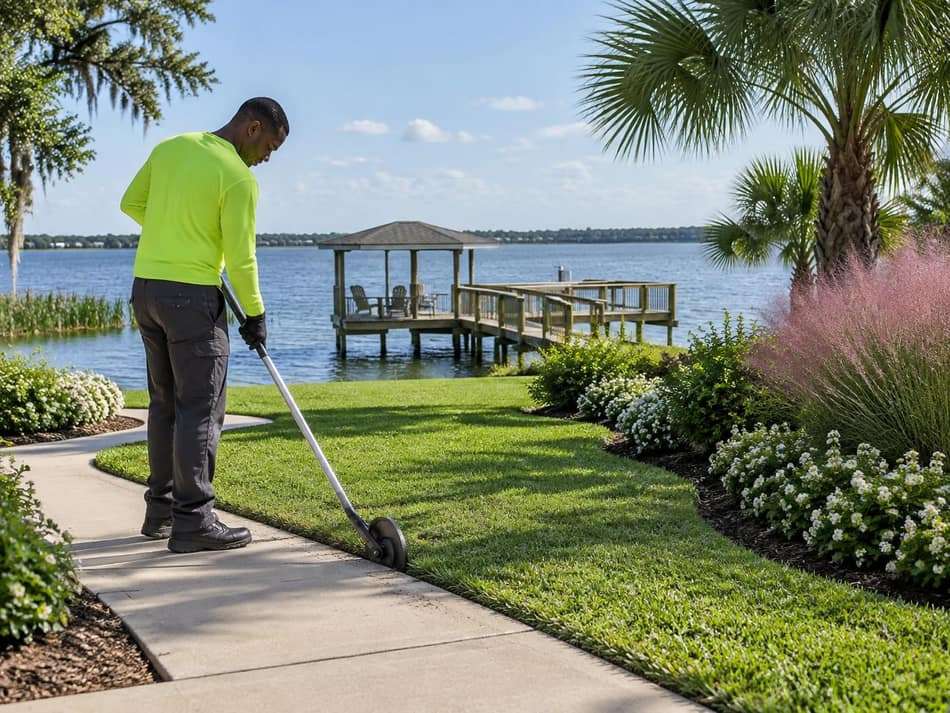
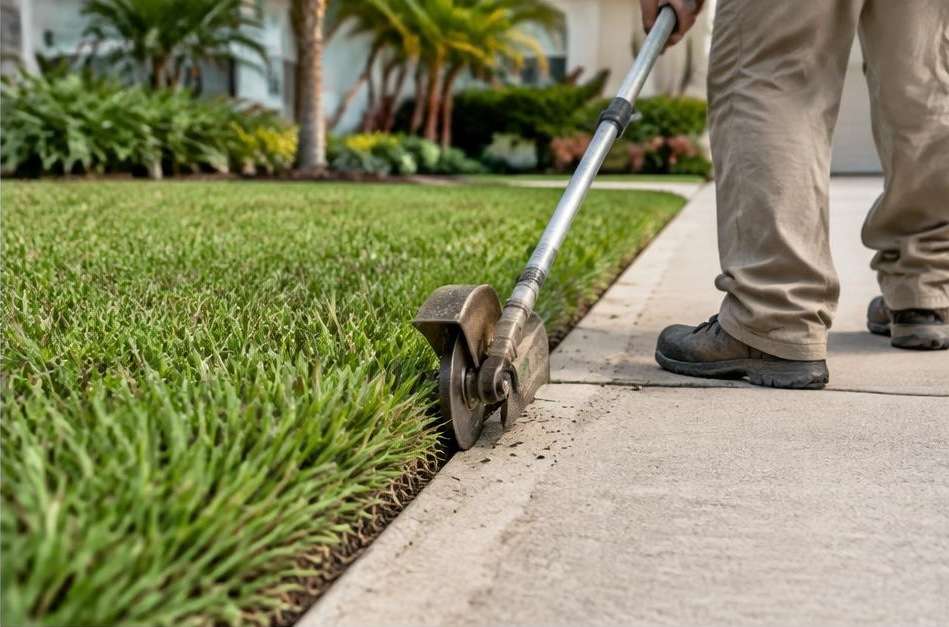
A lawn is judged by its edges as much as its middle. Clean edging along walks and a fresh border of mulch frame the grass, and if you are refreshing the beds beside the lawn, How Much Mulch Do I Need? Calculator for Florida Beds works out how much to buy.
For anything this guide cannot settle, the UF/IFAS Extension office in Polk County can identify weeds and pests, take soil samples and explain how the fertilizer ordinance applies to an address. For watering days, ask Polk County or your city utility. The care steps above are general guidance, and the label on any product and the rules for your address always come first.
Sources
- UF/IFAS Extension: St. Augustinegrass for Florida Lawns (ENH5/LH010)
- UF/IFAS Gardening Solutions: St. Augustinegrass
- UF/IFAS Extension Polk County: Residents Guide to the Polk County Fertilizer Ordinance
- Polk County: water restrictions
Written by the Polk County Landscaping editorial team. Rules and prices change, so check the linked agency before you act. Spotted a mistake? Send a correction.