The quick answer
Multiply the length of the bed by its width to get square feet, multiply that by the depth in feet (3 inches is 0.25 feet), and divide by 27 to get cubic yards. One cubic yard covers about 108 square feet at 3 inches deep, or about 162 square feet at 2 inches. The calculator below does the math and adds a margin, and the table underneath shows common sizes.
Mulch calculator
Odd shape? Split it into rectangles, calculate each and add the results. For a circle, use diameter × diameter × 0.785 as the area and type that number as length with 1 as width.
| Bed area | 2 in. deep | 3 in. deep | 4 in. deep |
|---|---|---|---|
| 50 sq ft | 0.31 cu yd | 0.46 cu yd | 0.62 cu yd |
| 100 sq ft | 0.62 cu yd | 0.93 cu yd | 1.23 cu yd |
| 200 sq ft | 1.23 cu yd | 1.85 cu yd | 2.47 cu yd |
| 300 sq ft | 1.85 cu yd | 2.78 cu yd | 3.7 cu yd |
| 500 sq ft | 3.09 cu yd | 4.63 cu yd | 6.17 cu yd |
How deep should mulch be in Florida?
The University of Florida's Florida-Friendly Landscaping program recommends a layer of about 2 to 3 inches, and UF/IFAS Gardening Solutions gives 3 inches as a target for most beds. Use about 1 inch around seedlings, small vegetables and herbs. A thicker layer than that does not help. It can hold too much water against the roots of plants and make it harder for water and air to reach the soil.
On Polk County's fast-draining sandy soil, a full 2 to 3 inches matters. Mulch keeps the soil cooler, slows evaporation between waterings and holds weeds down, which helps when watering days are limited.
Cubic yards, cubic feet and bags
Bulk mulch is sold by the cubic yard and is usually delivered by a landscape supplier. Bagged mulch is sold in cubic feet, with 2 cubic foot bags the most common size at big-box stores, but sizes vary, so read the label. A cubic yard is 27 cubic feet, which is about 13 or 14 bags of 2 cubic feet each.
Bulk is usually cheaper once you need more than a few cubic yards, and bags are easier for a small bed or a single pickup truck load. Ask the supplier what their yard measures, since delivered loads are sometimes rounded. We do not list prices here, because they change with season and supplier. Ask for a written price that includes delivery.
Adjusting for odd shapes and existing mulch
Curved beds are easiest to handle by breaking them into rectangles and adding them together. If the bed already has mulch, measure how deep it is now by pushing a ruler into it, and only order enough to bring it up to 2 or 3 inches. A top-up of an inch or less is often enough once the old layer has settled.
Add about 10 percent for settling and uneven ground. If you are covering a large area, compare the total with a bulk delivery rather than buying dozens of bags.
Which mulch is best for Florida?
UF/IFAS Florida-Friendly Landscaping lists pine bark, pine straw, fallen leaves and melaleuca mulch among its recommended options. Cypress mulch is not recommended by the program, because some of it comes from harvested wetland cypress. Pine straw lasts longer than pine bark and settles slowly, while pine bark breaks down faster, so beds need topping up more often.
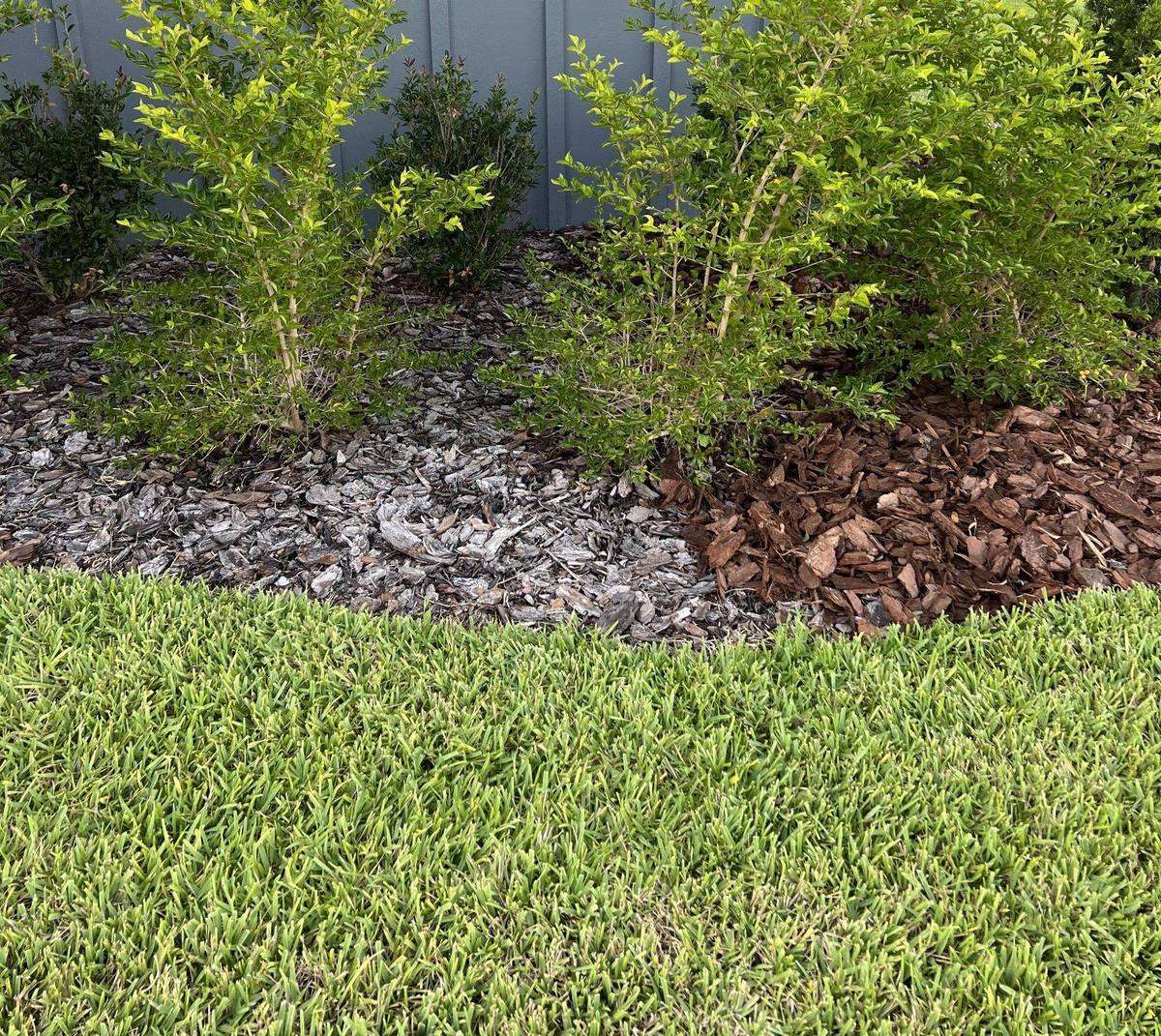
Dyed mulches look good and last, though colors fade as they weather, as in the left side of the photo above. Wood chips from a tree service can be a cheap, local option, but ask what trees they came from and avoid fresh chips right against delicate plants.
How to spread it
Pull weeds first, and water the bed if the soil is dry. Spread mulch evenly with a rake to the right depth. Keep it an inch or two away from shrub stems, as UF/IFAS recommends, and pull it back from tree trunks so the bark stays dry. Mulch piled against a trunk, sometimes called a mulch volcano, can cause rot and invite pests.
Leave the edges of the bed clean so mulch does not wash onto the sidewalk or into the lawn. A shallow trench along a lawn edge helps keep it in place. Keep mulch off sprinkler heads so the spray is not blocked.
When to refresh mulch
Check beds each spring and again before the rainy season. Refresh when the layer has thinned below about 2 inches or the color has faded and the bark has gone gray. Heavy summer rain can move mulch on sloped beds, so check those first after big storms.
A yearly top-up is typical for pine bark, and pine straw is often refreshed once or twice a year, depending on how fast it settles. Do not remove old mulch unless it is moldy, matted or full of weeds. Adding a thin layer on top is usually enough.
When to hire a pro
A landscape crew can measure, order and spread mulch in a day, and it makes sense for large properties, steep beds or if you do not have a truck. Ask what the quote includes: the mulch, delivery, labor, edging and clean-up. Local landscaping and lawn care crews that offer mulch refreshes are listed in our directory by city.
Sources
- UF/IFAS Florida-Friendly Landscaping: Principle 4, Mulch
- UF/IFAS Gardening Solutions: Choosing and installing mulches
- UF/IFAS Extension Polk County: Organic mulches in the Florida-friendly landscape
Written by the Polk County Landscaping editorial team. Rules and prices change, so check the linked agency before you act. Spotted a mistake? Send a correction.