Before you start
Plan the job so that the sod goes down soon after it arrives. Sod is alive, and a pallet that sits in the sun for a day or more can overheat and dry out. Measure the lawn, order about 5 to 10 percent extra, and have the soil ready and a hose or sprinkler working before the truck arrives.
Timing matters, but less than preparation. University of Florida turfgrass specialist Laurie Trenholm says she usually prefers spring, but has seen sod establish in every season. Summer rain helps but heat can dry rootless sod quickly, fall slows warm-season grass down, and a hard freeze can damage new sod. See our guide on when to install sod in Central Florida for the best months in Polk County.
Step 1: Prepare the soil
Trenholm says the most important factor is how well the ground is prepared. Her recommendations are to work organic matter into the soil, clear out construction debris, level the ground and repair or replace irrigation if needed. She also warns that fill soil brought in for house foundations often has a high pH and is poor for planting, and that compacted, uneven soil lowers the chance that sod will take.
Kill or remove the old turf and weeds first, rake out rocks, roots and debris, and loosen the top few inches of soil. Much of Polk County has sandy ridge soil that drains quickly, so mixing in compost or other organic matter helps it hold moisture. For a precise answer on pH and nutrients, take a soil sample to the UF/IFAS Extension office in Polk County. St. Augustine grass generally does best at a soil pH of about 6 to 6.5.
Step 2: Grade, smooth and check the sprinklers
Rake the surface smooth so that the sod will sit flat against the soil, with the finished level about an inch below sidewalks and driveways so that the grass does not hang over the edge. Slope the ground gently away from the house so that water does not pool against the foundation.
Run each sprinkler zone before you lay sod and fix any broken, tilted or clogged heads. Watering is what carries new sod through its first weeks, and a dry corner at that stage is hard to recover. Our guides on adjusting and replacing sprinkler heads explain the repairs.
Step 3: Lay the sod
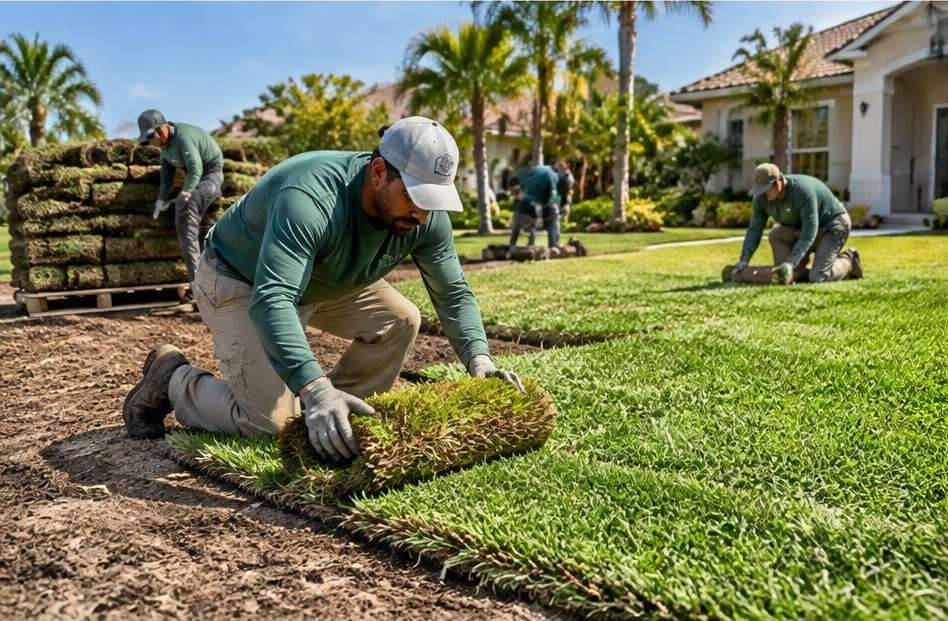
Start along a straight edge, such as a driveway or sidewalk, and lay the first row tight against it. Stagger the seams in the next rows like bricks so that the joints do not line up. Push the edges together without overlapping them and without leaving gaps, since gaps dry out and let weeds in.
Use a sharp knife to trim pieces around curves, sprinkler heads and beds. Avoid small, thin strips at the edges, which dry out first, and use larger pieces there. Work from the sod you have already laid, rather than walking on bare soil, so that you do not leave footprints that become low spots.
Step 4: Roll or tamp and water right away
Press the sod into the soil with a roller or by walking over it with care, so that the roots make contact with the ground. Air pockets under the sod are a common reason pieces fail to root. Then water the whole area thoroughly as soon as you finish each section, rather than waiting until the end of the day.
Sod roots sit very close to the surface, so UF/IFAS urban horticulture agent Whitney Elmore advises keeping new sod from drying out during the first 10 days or so, using brief, frequent watering in the first few weeks, depending on the season. She also notes that new turf often needs much less water than some installers recommend. Our guide on how often to water new sod covers the schedule and the watering rules.
Step 5: Care for the first 30 to 60 days
Keep foot traffic off the new lawn while it roots. After about two weeks, lift a corner of a piece and tug gently. If it resists, roots are forming and you can reduce how often you water. Wait to mow until the sod is rooted and the grass has grown above your mowing height, and mow St. Augustine at three to four inches.
Do not fertilize right away. University of Florida research found there is no need to fertilize newly placed St. Augustinegrass sod, and UF/IFAS guidance is to wait 30 to 60 days after installation before the first application. Polk County's ordinance also bars nitrogen and phosphorus fertilizer for the first 30 days after sodding.
Common mistakes to avoid
The most common mistakes are laying sod over compacted or debris-filled soil, leaving gaps between pieces, letting the pallet sit in the sun before it goes down, overwatering, and skipping an irrigation check. Fertilizing too early is another one. In new-construction lots, builder fill is the most common cause of failure.
If you are not sure the job is worth doing yourself, a lawn care or landscaping crew can prepare the site and lay the sod. See our guide on sod installation costs to compare prices.
Sources
- UF/IFAS News: Summer sodding and lawn preparation
- UF News: No need to fertilize newly placed St. Augustinegrass sod
- UF/IFAS Gardening Solutions: lawns
Written by the Polk County Landscaping editorial team. Rules and prices change, so check the linked agency before you act. Spotted a mistake? Send a correction.