

Why adjust your sprinkler heads
Sprinkler heads drift out of adjustment from mowers, foot traffic, settling soil and landscaping changes. The result is spray on the driveway, a dry strip along the sidewalk and brown patches in the lawn. With watering days limited in Polk County, every gallon needs to land on the grass, so a quick adjustment is one of the best low-cost fixes you can make.
Look for the signs while the system runs: water on pavement, heads that spray the wrong direction, heads that tilt or sit below the grass, and dry spots between heads. Run one zone at a time and note which heads need work.
Tools you need
Most adjustments take a small flat-head screwdriver. Many rotor heads also need a small adjustment key or tool that comes with the head, and some use a hex key. A trowel, a pair of gloves and a few wire flags to mark the heads you have finished make the job easier.
Adjust the water while it runs
Keep the zone running while you adjust it. That lets you see the result right away, without starting and stopping the water. Work in the early morning or evening, inside the hours your utility allows, so that you are not breaking the rules while you test. Check the current rules for your address first.
Walk the zone from the head farthest from the valve to the nearest, adjusting one head at a time. Make small changes, then watch the spray for a few seconds before you adjust again.
Adjust a rotor head
Rotors usually have two adjustments. Arc sets how wide the head turns, and radius sets how far the water throws. The radius screw is on top of the head, and the arc is set with a key or a screwdriver, depending on the model. Manufacturer guides, including Hunter's, show where the adjustment is on each model.
Direction varies by brand, and guides disagree on which way to turn the radius screw, so check the instructions for your model before you turn anything. Rotor arcs have limits, and you will hear a ratcheting noise when you reach the maximum or minimum. Stop there, and do not force it.

Adjust a pop-up spray head
On a spray head, the radius screw on the nozzle is turned with a flat-head screwdriver to shorten or lengthen the throw. Some nozzles use a deflector or shield that you lower to water closer to the head or raise to throw farther. Variable-arc nozzles let you set the angle, and fixed-arc nozzles do not.
A fixed-arc nozzle that sprays the wrong pattern cannot be adjusted to fix it. It needs to be replaced with the right nozzle, which is a quick job. Keep all heads on one zone matched, since mixing spray and rotor heads on the same zone causes uneven watering.
Straighten tilted or sunken heads
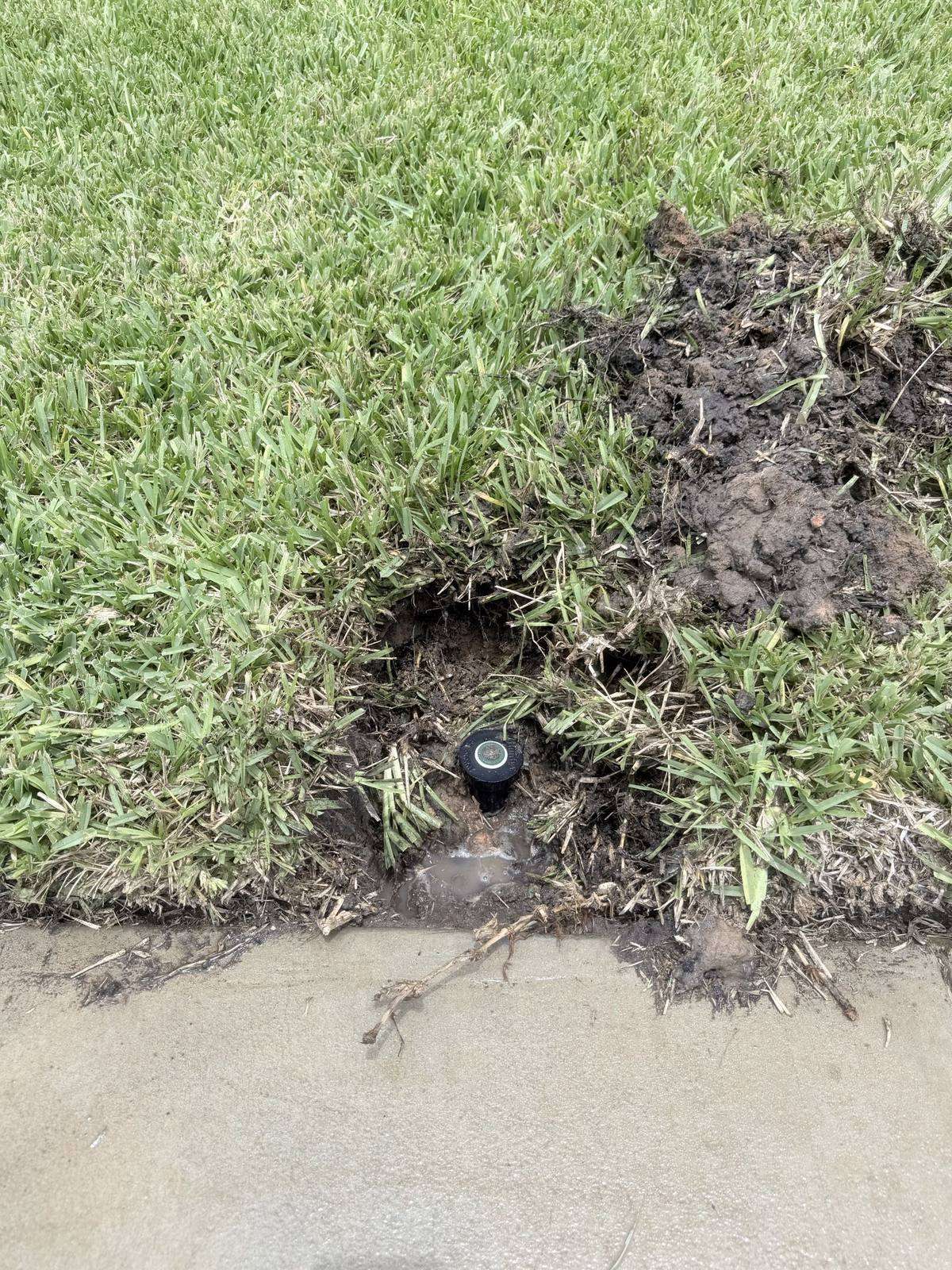
A head that leans or sits low in the grass sprays the wrong way and gets blocked by turf. Dig carefully around the head, level it so the top is flush with the soil, and pack the soil firmly around it. If it keeps sinking or leaning, the riser or the fitting under it may be damaged, and the head needs replacing. See our guide on how to replace a sprinkler head.
Trim grass and weeds around each head, since overgrown turf can block the spray and cause a dry patch.
Common problems and quick fixes
Water hitting the street or driveway usually means the arc is too wide or the radius is too long. Narrow the arc to match the edge of the lawn, then shorten the radius until the spray stops at the grass. Dry strips between heads mean the radius is too short or the heads are too far apart. Lengthen the throw a little and check that neighboring heads overlap, since head-to-head coverage is what keeps the whole lawn evenly watered.
Spray that is misty or drifts in the wind is a sign that the pressure is too high for the nozzle, or that the radius is turned down too far. A fine mist wastes water on windy days. Heads that spray a thin or uneven stream usually have a clogged nozzle, so remove the nozzle and rinse it before you adjust anything else.
Seasonal checks for Florida lawns
Check your heads at the start of the rainy season and again after a long dry spell. Summer storms wash soil away from heads and leave them tilted, and fast-growing turf can cover the spray in the summer months. Mowing crews also hit heads, so look them over after any big yard work.
Run the system once a month in daylight, inside the watering hours for your address, and walk the zones. It takes about ten minutes per zone and helps you catch a broken head before it wastes water or leaves a dead patch. Our watering days lookup shows which day you are allowed to water.
Check the result and call a pro if it still isn't right
After you finish, run the whole system and look for dry areas and runoff. A simple catch-can test, which uses cans or cups placed around the lawn to see how much water each area gets, shows whether coverage is even. If heads still do not pop up, a zone will not turn on or the pressure is low, the problem is likely in the valve, wiring or pipe. A sprinkler repair company can diagnose it. We list local pros by city.
Sources
- Hunter Industries: How to adjust a Hunter rotor
- Angi: How to adjust sprinkler heads
- Polk County: water restrictions
Written by the Polk County Landscaping editorial team. Rules and prices change, so check the linked agency before you act. Spotted a mistake? Send a correction.