Start with your yard, not the grass
The best grass for a Polk County lawn depends on three things: how much sun the yard gets, whether you irrigate, and how much work you want to put in. Most of the county has sandy soil that drains quickly, summers are hot and wet, and watering is limited to one day a week while the current shortage order is in effect. A grass that thrives on a sunny, irrigated lot in Lakeland can struggle on a shady lot under oaks in Bartow, or on a dry acre in Auburndale.
This guide compares the grasses you are most likely to be offered: St. Augustine, Bahia and Zoysia, with a short look at Centipede and Bermuda. It covers how each one handles sun, shade, drought, pests and mowing, and what that means for your lot.
St. Augustine: the default lawn
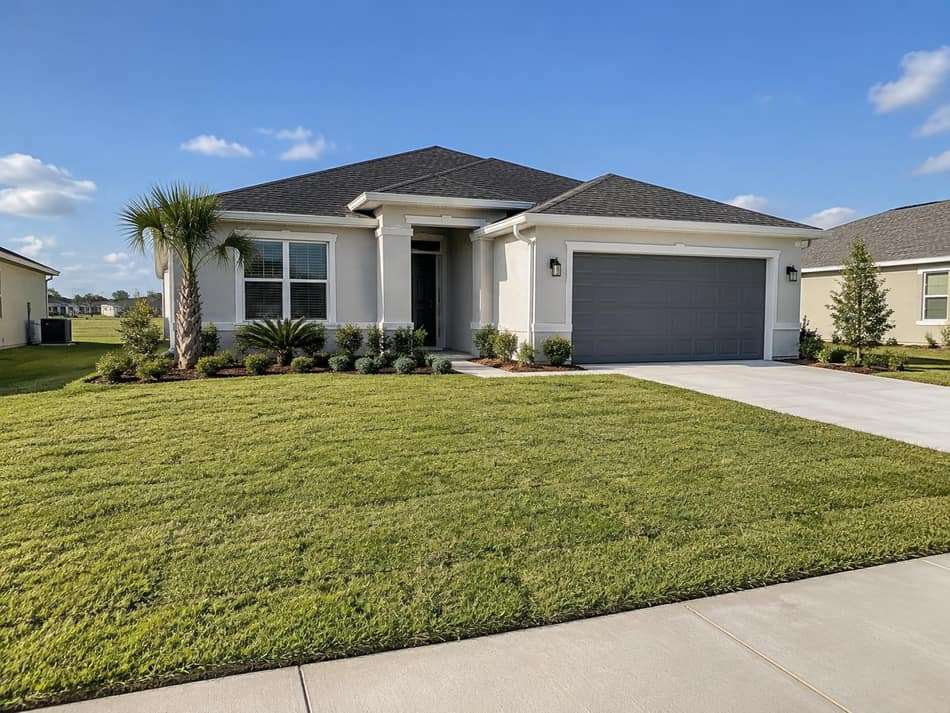
St. Augustine is the most common lawn grass in Polk County subdivisions, and for good reason. It makes a thick, dark green, coarse-bladed lawn that crowds out weeds and handles heat well. It spreads by runners, so it fills in bare spots, and it is sold as sod rather than seed.
It is not one grass but several varieties, and the differences matter. Floratam is the variety most builders install. It is a vigorous, sun-loving variety that is not a good choice for heavy shade. Palmetto and Seville are common alternatives that do better in partial shade, with Seville a finer, shorter variety. Raleigh handles cold better but is more often seen in the northern part of the state. Ask which variety is being quoted, because a price for generic St. Augustine tells you little.
The trade-offs are water and pests. St. Augustine needs regular irrigation to look its best, and its biggest pest is the southern chinch bug, which can kill patches in the heat of summer. Some varieties resist chinch bugs better than others, though Floratam's original resistance has largely been lost, and none is immune. Our guide to chinch bugs explains how to spot and stop them. Mow St. Augustine at three to four inches; cutting it shorter weakens the roots and invites weeds.
Bahia: tough, plain and low-maintenance
Bahia is the grass you see on acreage, roadsides, pastures and many older lots. It is deep-rooted, handles drought and poor sandy soil better than most turf, and costs less to establish and maintain. Pensacola and Argentine are the common types, and Argentine makes a denser, darker lawn.
The downsides are looks and pests. Bahia is coarser and more open than St. Augustine, and it throws up tall, pale seed stalks through summer that need frequent mowing to stay tidy. It does not do well in much shade. Mole crickets are a well-known pest of Bahia on sandy soil, and the damage appears as brown, spongy, tunneled patches. It is a good choice for large, unirrigated lots in places like rural Auburndale or Haines City, where you want green cover without a high water bill, and a poor one for a lot where an HOA expects a manicured look. Mow Bahia at about three to four inches.
Zoysia: dense, fine and slow to recover
Zoysia makes a dense, fine-textured, soft lawn that feels good underfoot and stands up to foot traffic. It handles heat and some shade, and it needs less water than St. Augustine once established. It crowds out weeds well and is increasingly offered in new subdivisions as a premium option.
It also has drawbacks. It grows slowly, so a damaged lawn takes a long time to fill in. It builds up thatch, which needs periodic dethatching, and it needs a sharp mower and a lower cut than St. Augustine, generally in the range of one to two and a half inches depending on the variety. Sod costs more up front, and it is more prone to a fungal disease called large patch in cool, wet weather. It suits an irrigated lot where the owner wants a finer look and is willing to maintain it correctly.
Centipede and Bermuda
Centipede is a low-maintenance grass that grows slowly and needs little fertilizer, which makes it attractive on paper. It prefers acidic, sandy soil and has poor tolerance for heavy traffic and for high-pH or poorly drained spots, so it is a less common choice here than in the Panhandle and north Florida.
Bermuda is the grass of golf courses and sports fields. It wants full sun, needs frequent mowing and a regular feeding program, and thins badly in shade. It can work on a sunny, irrigated yard that sees a lot of play, but it is the highest-maintenance option on this list.
Side by side
Sun and heavy use: Zoysia, Bermuda or sun-loving St. Augustine. Partial shade: Palmetto or Seville St. Augustine, or Zoysia in light shade. Deep shade under oaks: no turf grass does well, so mulch or a shade-tolerant groundcover is usually the better answer. Large, unirrigated lot: Bahia. Lowest water use once established: Bahia, then Zoysia. Fewest pest problems: Bahia and Zoysia face fewer serious insect problems than St. Augustine, though they have their own.
What changes for Polk County rules
Two local rules affect the choice. Watering is currently limited to one day a week for Polk County Utilities customers, which favors grasses that handle gaps between waterings, such as Bahia and Zoysia, and makes an even sprinkler system important for any grass. You can look up your day with our watering-days tool. Also, Polk County's ordinance restricts fertilizer near water and before heavy rain; some cities and nearby counties add a summer ban, so check your city. A grass that depends on heavy feeding is a poorer fit.
Neighborhood matters too. Many HOAs specify the grass type, and some prohibit Bahia. Check your covenants before you pick a grass, and keep a record of what you choose.
Before you replace a lawn
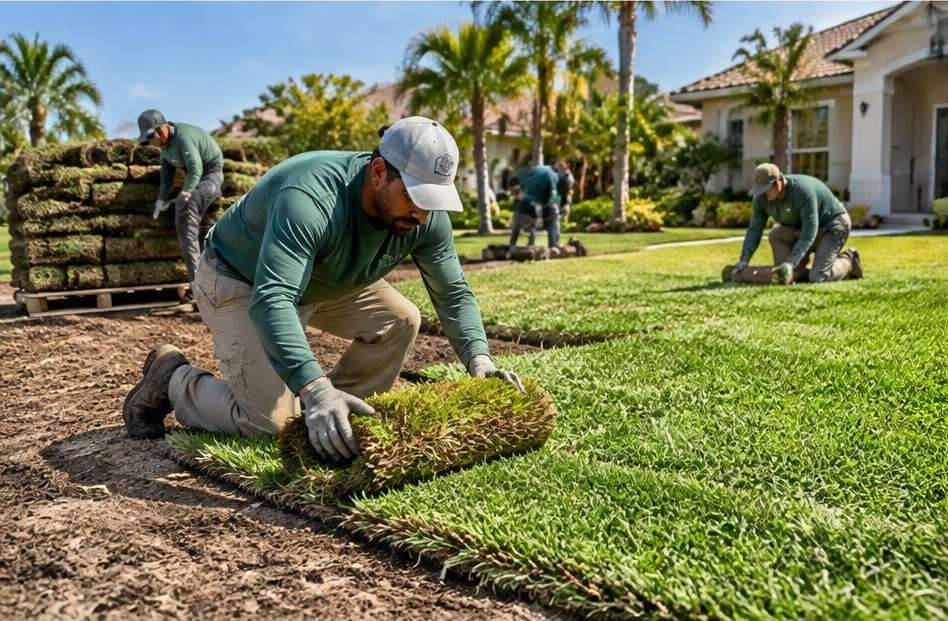
Work out why the old lawn failed before you spend on a new one. Thin turf under oaks, dry strips from weak sprinklers, chinch bug patches and compacted builder soil all kill a lawn regardless of the grass, and the new sod will fail the same way. Ask a local crew to look at shade, irrigation coverage and soil first, and if you do replace turf, our guide to when to install sod covers timing and the first thirty days.
Our recommendation: for an irrigated HOA lot in sun, choose a St. Augustine variety suited to your light, or Zoysia if you want a finer look. For a large lot without irrigation, choose Bahia. In real shade, plan for beds and groundcover instead of grass.
Sources
Written by the Polk County Landscaping editorial team. Rules and prices change, so check the linked agency before you act. Spotted a mistake? Send a correction.