Why Central Florida sand drains so fast
UF/IFAS Gardening Solutions says the soils of North and Central Florida are typically very sandy and do not hold water or nutrients very well. The UF/IFAS lawn-planting publication adds that the majority of Florida's soils are sand-based, with little organic matter and low water- and nutrient-holding capacity. Sand grains are large, the gaps between them are large, and water moves through those gaps quickly, taking dissolved nutrients with it.
That is why a Polk County bed can look dry a day after a soaking rain, why fertilizer can seem to vanish, and why watering days limited to one a week matter more here than on heavier soil. The fix is not to make the sand into something else. It is to add organic matter that holds some of the water and nutrients where roots can reach them.
What organic matter and compost do
According to the UF/IFAS lawn-planting publication, organic amendments such as compost can improve soil drainage, increase water and nutrient holding capacity, and promote a healthy community of soil organisms. A UF/IFAS Florida-Friendly edible landscape publication says amending soil with compost will gradually improve soil quality and structure, including fertility, water-holding capacity, aeration and buffering capacity, and that Florida soils of every type, whether sand, silt, clay or loam, can benefit from organic matter.
The word gradually matters. Organic amendments decompose over time as soil microorganisms use them, as UF/IFAS notes, and they release plant nutrients as they do. So compost is not a one-time cure. Expect to add more over time, and expect the first results to be modest rather than a different soil.
Unlike organic material, mineral amendments do little for sand. The lawn-planting publication says inorganic amendments can permanently improve drainage but have minimal effect on water and nutrient holding capacity, and little to no effect on soil biology and nutrient status. Adding more sand to sand gets you nowhere.
Test first: soil tests through UF/IFAS Extension
UF/IFAS recommends getting a soil analysis before planting a lawn, and it makes sense before any bed work. Your county Extension office provides sample bags, shipping boxes and submission forms for the UF/IFAS Extension Soil Testing Laboratory, free of charge, according to the laboratory's FAQ page. The lab says to collect soil from 20 or more spots in each area, mix the samples in a clean plastic bucket, and sample from the surface to the depth of tillage, usually 0 to 6 inches. The lawn-planting publication gives a slightly smaller count of 10 to 15 locations for a lawn, so follow the instructions that come with the kit. The lab says a report is emailed or mailed within 2 working days after the sample arrives at the lab.
Know what the test covers. The lab lists pH, lime requirement, major nutrients (phosphorus, potassium, calcium and magnesium) and micronutrients. Gardening Solutions notes that the lab does not analyze soil texture, and the FAQ page does not mention organic matter, so the report will not tell you how much compost to add. What it does tell you is whether pH or nutrients are off, which is the information that stops you from guessing with lime, sulfur or fertilizer. UF/IFAS Gardening Solutions says the median soil pH for Florida soils is 6.1, that maximum nutrient availability is generally at a pH between 6 and 7, and that it is best to apply soil amendments only when soil tests indicate a need.
How much to add, for beds and for new lawns
For an existing planting bed, a UF/IFAS Extension Orange County article on Florida soil prep says compost should be added between plantings, aiming for 1 to 4 inches of compost over the garden bed, mixed into the existing soil with a shovel to help it reach the root zone. It lists compost, wood chips, worm castings and composted manure as materials that help soil hold moisture and nutrients.
For a lawn that is being planted or replanted, the numbers are in the UF/IFAS lawn-planting publication. Its general guideline is to add organic soil amendments at 3 to 6 cubic yards per 1,000 square feet, roughly 15 to 30 percent by volume. It says not to exceed 6.5 cubic yards per 1,000 square feet, about 35 percent by volume, because of the risk of soil subsidence as the amendment decomposes or excessive soil moisture. For scale, the one-inch-deep layer of a cubic yard covers roughly 324 square feet, and our guide How Much Mulch Do I Need? Calculator for Florida Beds shows the cubic-yard arithmetic.
How to work it in
The lawn publication says organic amendments should be tilled or mixed into the top 6 inches of the soil, and that if amendments, lime or fertilizer have been added, the soil should be tilled to a depth of 6 to 8 inches. It also makes a point that suits much of Polk County: soils with very little silt or clay, under 5 percent combined, may not benefit from tillage alone because they have little structure and can return to a compacted state, so compost should be incorporated with the tillage.
Use only well-decomposed, mature compost. UF/IFAS says amendments with a carbon-to-nitrogen ratio of 30 or less should be incorporated, otherwise nitrogen in the soil may be tied up and unavailable to plants, and high-ratio materials such as wood chips are better as surface mulch. It also says all organic materials should be sterilized or fully composted to avoid bringing in weed seed. Check for compaction as well. The publication suggests pushing a rod under an inch across into moist soil; if it will not go in at least 6 inches without significant force, compaction will likely affect the turf, and residential soils are typically worse than natural ones because of construction traffic.
Lawns versus beds: when amending is worth it
Amending is easiest and most useful before anything is planted. The lawn publication recommends soil amendments before planting a lawn, and the same logic applies to a new bed. Once sod or established plants are in, the soil is hard to reach without digging them up. If you are about to lay sod, finish the soil work first and then follow the steps in our guide How to Lay Sod in Florida: Step-by-Step Guide.
For an established lawn, we did not find a UF/IFAS rate for adding compost, so we are not giving one. What UF/IFAS does recommend in its Florida-Friendly edible landscape publication is grass-cycling: use the mulch setting on the mower and leave the clippings, which increases organic matter and returns nutrients over time. If the lawn is struggling, a soil test and a check on watering and mowing come before any amending. Ask the Polk County Extension office about topdressing an established lawn.
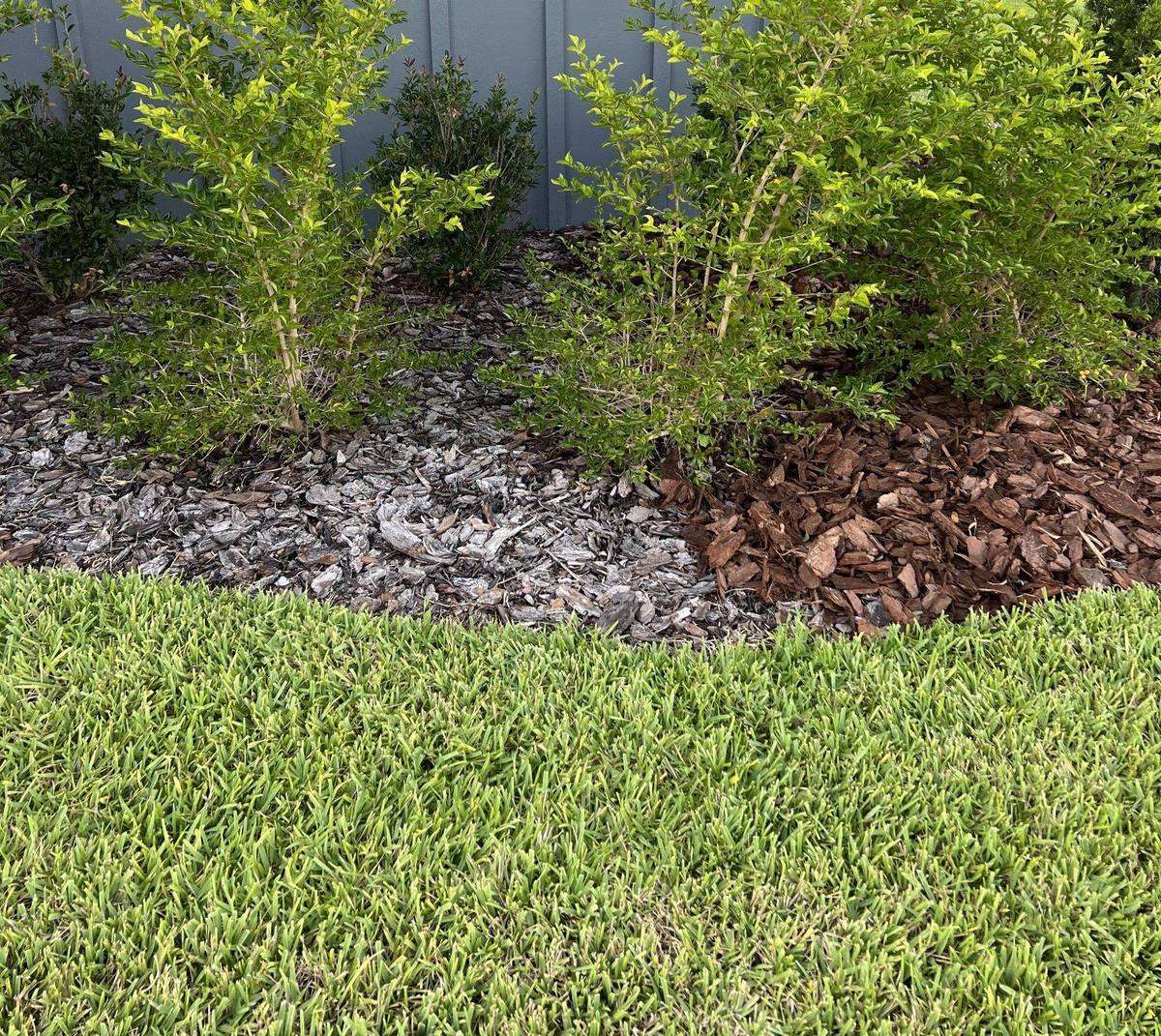
In beds, the reward is greater and the work is easier, since you can work compost in between plantings, and then mulch over it. Mulch on top and compost mixed in do different jobs, and a bed benefits from both.
Mistakes to avoid
Too much of one material is the first. The lawn publication caps organic amendments at 6.5 cubic yards per 1,000 square feet. Gardening Solutions warns that annual applications of manure-based composts can build up phosphorus in the soil and that too much lime or sulfur can damage plants and may reduce soil productivity. Mix sources and test before adding more.
Sand into clay is the second. If you find a clay patch, resist the old advice to loosen it with sand. The University of Arkansas Extension says the clay particles will fill the open spaces between the sand particles, leaving a denser soil, and that it would take about 50 percent or more sand by volume to change a clay soil, which is not realistic. Gardening Solutions says clay soils compact more easily and drain more slowly than sandy ones. Compost is the better material there too.
Over-fertilizing is the third, especially on new sod. Under the Polk County ordinance as summarized by UF/IFAS, there is no fertilizer within 10 feet of a waterbody or wetland, no nitrogen or phosphorus for the first 30 days after sodding, and none in severe weather or when more than 2 inches of rain is likely within 24 hours. Some cities and nearby counties add summer bans, so check your city. Adding compost is not a reason to skip the soil test.
A simple order of work
Test the soil. Fix pH only if the report calls for it. Clear and loosen the area, spread mature compost at a sensible rate, and work it into the top 6 inches. Plant or lay sod, then mulch the beds. For more on keeping the whole yard low-maintenance, see our guide Florida-Friendly Landscaping: Low-Maintenance Yards.
A landscape crew can do the tilling and delivery for a larger area. Ask them what material they are using, how many cubic yards per 1,000 square feet, and how deep they will work it in, and compare those answers with the UF/IFAS figures above.
Sources
- UF/IFAS: Preparing to Plant a Florida Lawn (LH012)
- UF/IFAS Gardening Solutions: Working in your Florida soil
- UF/IFAS Extension Orange County: Florida Gardening 101, Soil Prep
- UF/IFAS Extension Soil Testing Laboratory: Frequently asked questions
- UF/IFAS: Recycling Organic Materials to Improve Your Florida-Friendly Edible Landscape (ENH1335)
- UF/IFAS Extension Polk County: Residents guide to the Polk County fertilizer ordinance
- University of Arkansas Extension: Adding sand to soil
Written by the Polk County Landscaping editorial team. Rules and prices change, so check the linked agency before you act. Spotted a mistake? Send a correction.