What Florida-friendly means
Florida-friendly landscaping is a University of Florida program for yards that use less water, fertilizer and pesticide and still look good. Its core idea is the right plant in the right place: choose plants that suit your light, soil and rainfall, and they need far less help. Most of Polk County is in USDA hardiness zone 9b, with some warmer pockets, but zone is only part of the picture. Sandy, fast-draining soil, hot wet summers, dry winters and the occasional freeze matter just as much, so check your own ZIP code on the USDA map and think about your yard's conditions.
The program also covers watering efficiently, fertilizing appropriately, mulching, managing pests responsibly, and protecting waterways, which is a real concern for the many lakefront yards in Lakeland, Winter Haven and Auburndale.
Shrubs that handle sun and sand
Firebush is a Florida native with orange-red tubular flowers that hummingbirds and butterflies love, and it handles full sun and heat. Walter's viburnum is a native that works well as a hedge or screen. Dwarf yaupon holly is a tough, compact shrub that tolerates drought, salt and sandy soil, and makes a clipped hedge that needs little water once established. Coontie is a native cycad that tolerates sun and shade and is the host plant for a native butterfly.
Give any new shrub regular water for the first few months while the roots establish, and then cut back as it settles in. Planting in fall, winter or early spring gives roots time to grow before the summer heat.
Color without constant watering
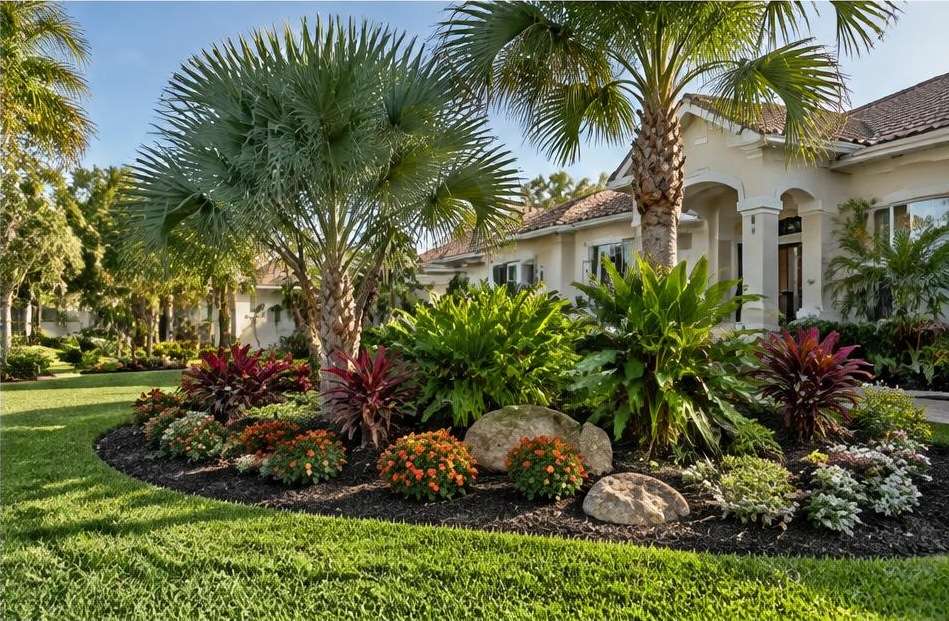
Pentas, blue daze, bulbine, society garlic and crotons all give color with modest water once established. Pentas and blue daze bloom through much of the year and attract butterflies. Bulbine and society garlic are tough, clumping plants that handle drought and heat. Crotons give bold foliage color but are tender, so they can be damaged in a freeze and should be planted in a protected spot or covered on cold nights.
Mix plants with different bloom times and keep thirstier plants together in one irrigation zone, so you are not overwatering the tough ones to keep the fussy ones alive.
Palms for Polk County
The sabal palm, Florida's state tree, is the most reliable choice. It is native, handles wet and dry spells, and survives the occasional freeze. Pygmy date palms and foxtail palms add a tropical look but are more cold-sensitive and can be damaged in a hard freeze, so plant them where they get some protection. Chinese fan palms are also commonly planted.
Think about the final size of a palm before you plant, and keep it away from roofs, pools and power lines. Avoid queen palms near sidewalks and driveways, because they drop heavy, messy fruit clusters. Palms need proper trimming, not a hard cut that strips the crown, and our hurricane season tree prep guide covers what to trim before storms.
Grasses and groundcovers that reduce mowing
Muhly grass is a native ornamental that sends up clouds of pink plumes in fall and needs almost no care. Fakahatchee grass is a large native clumping grass for a bold look in sunny, moist spots. Perennial peanut is a low, spreading groundcover with yellow flowers that replaces turf on sunny strips and slopes, and Asiatic jasmine covers shaded ground under trees where grass will not grow.
Replacing a struggling strip of lawn with a groundcover can cut mowing, watering and fertilizer, and it solves problems like thin turf under oaks that no amount of grass care will fix.
Planning for the occasional freeze
Polk County usually has a few cold nights each winter, and now and then a hard freeze. Tender plants such as crotons, pentas and many palms can be burned back. On a forecast freeze night, cover them with frost cloth or an old sheet that reaches the ground, and take the cover off in the morning. Plastic touching the leaves can do more harm than good.
If a freeze does burn a plant, resist the urge to prune the brown growth right away. The damaged leaves help protect the plant from the next cold snap, and it is easier to see what is dead once the danger of frost has passed in late winter or early spring.
Plants that help butterflies, birds and bees
Many of the plants above double as wildlife habitat. Firebush feeds hummingbirds and butterflies, coontie hosts a native butterfly, and muhly grass gives birds cover and seed. Planting in drifts of a few of the same plant makes it easier for pollinators to find, and leaving a little leaf litter under shrubs helps small wildlife without adding any work.
Plants to avoid
Several popular landscape plants are on Florida's invasive species list because they escape into natural areas. Mexican petunia, Lantana camara, nandina, coral ardisia and Brazilian pepper are among the well-known ones, and some are still sold at garden centers. Check a plant against the Florida Invasive Species Council list before you buy, and choose a native or non-invasive alternative instead.
Mulch, water and fertilizer
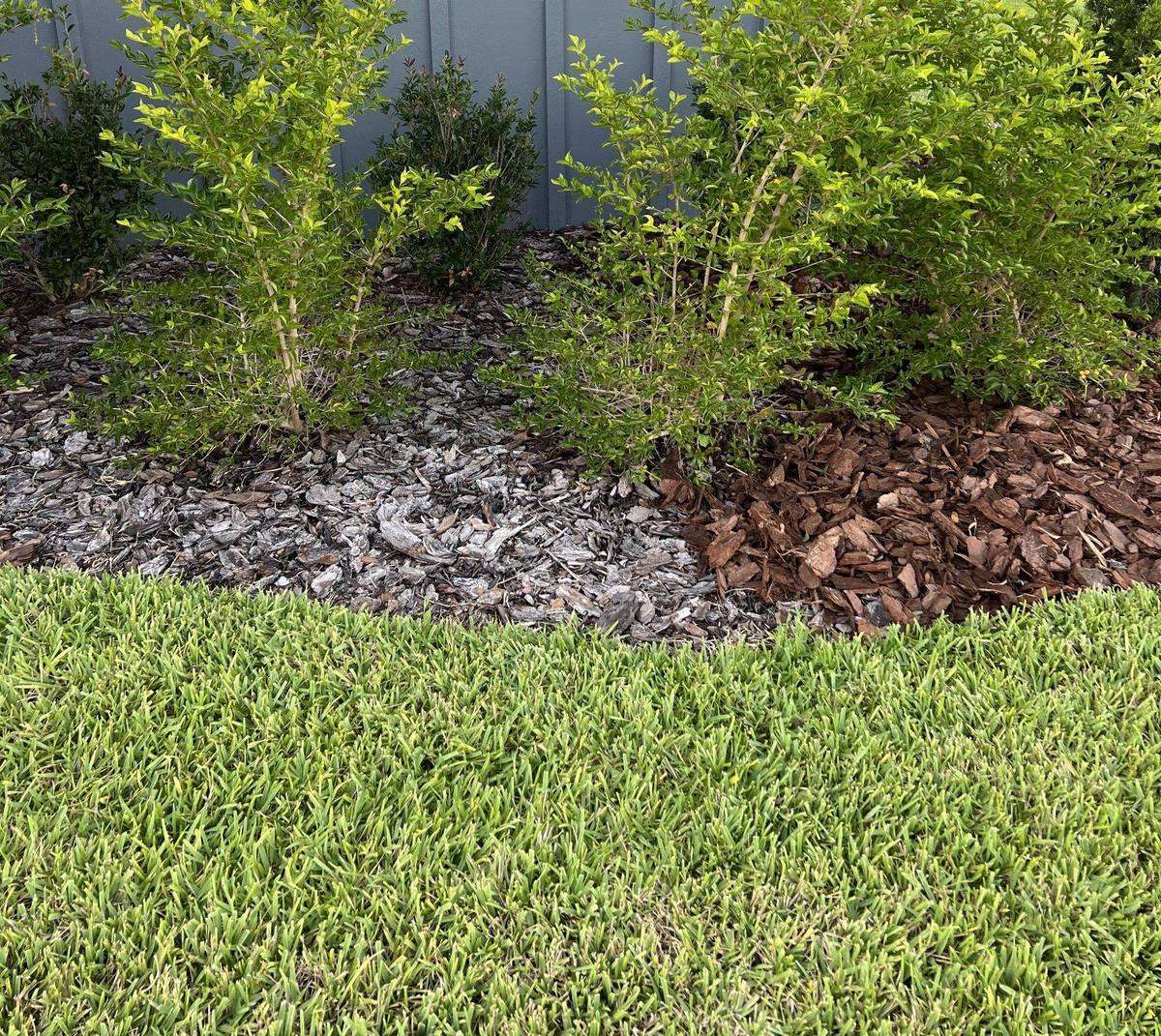
Spread two to three inches of mulch over beds, kept a few inches away from trunks and stems so they do not rot. Mulch holds moisture, keeps weeds down and cools the roots, which matters on sandy ground that dries quickly. Bark mulch fades to gray as it weathers and breaks down, as on the left side of the photo, so top it up with a fresh layer when the depth drops or the color is gone, rather than piling new mulch on thick. Water new plants deeply and less often, not a little every day, and check your watering day before you set a timer.
Most established Florida-friendly plantings need little fertilizer. Polk County's ordinance restricts fertilizer near water and before heavy rain; some cities and nearby counties add a summer ban, so check your city, and keep fertilizer away from lakes, ponds and drains all year.
Planning your planting
Walk the yard before you shop and note where the sun hits at different times of day, where water pools after a storm and where the soil stays dry. Put sun-lovers in the sun, shade plants under trees and wet-tolerant plants in low spots. Group plants by water need, and leave room for each to reach its full size.
If you want help, a landscape designer or a local crew can lay out beds, irrigation and plant choices together. Our landscape design page covers typical costs and what to ask before you hire.
Sources
- UF/IFAS Florida-Friendly Landscaping program
- UF/IFAS Gardening Solutions
- USDA Plant Hardiness Zone Map
- Florida Invasive Species Council (FLEPPC)
Written by the Polk County Landscaping editorial team. Rules and prices change, so check the linked agency before you act. Spotted a mistake? Send a correction.