What Florida-friendly landscaping means
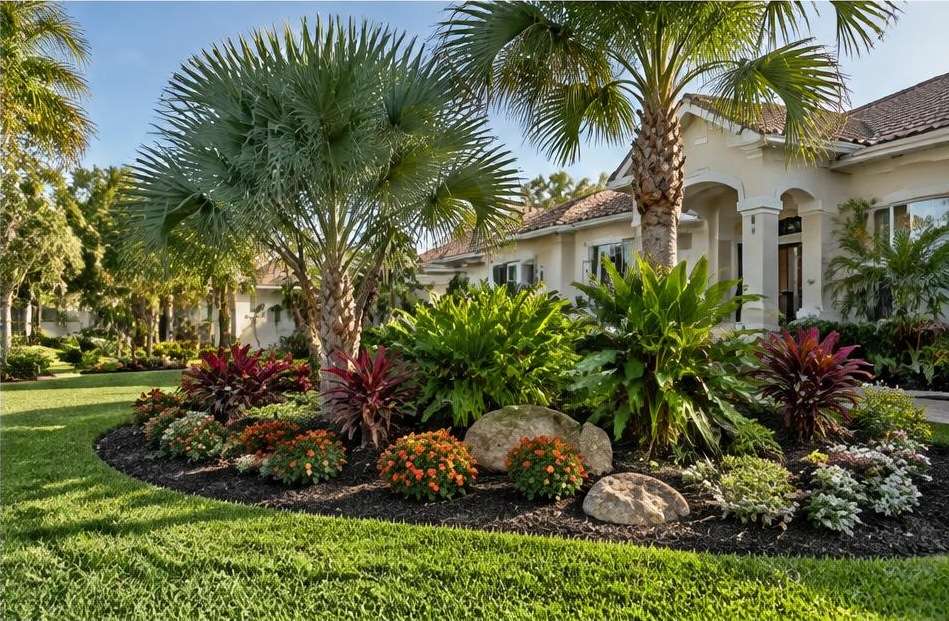
Florida-Friendly Landscaping is a program run by the University of Florida's Institute of Food and Agricultural Sciences (UF/IFAS). It is built on nine principles, and it is not a plant list or a style. You can follow it with a lawn, with palms and tropicals, or with a mostly native bed. The aim is a yard that needs less water, fertilizer and upkeep and sends less pollution to Florida's lakes and rivers.
The nine principles, in the program's order, are: right plant, right place; water efficiently; fertilize appropriately; mulch; attract wildlife; manage yard pests responsibly; recycle yard waste; reduce stormwater runoff; and protect the waterfront. This guide goes through them with Polk County conditions in mind: sandy soil, yards on lakes and ponds, and watering limited to one day a week. For specific plant choices, see our guide Florida-Friendly Plants That Thrive in Polk County, which this one deliberately does not repeat.
Right plant, right place
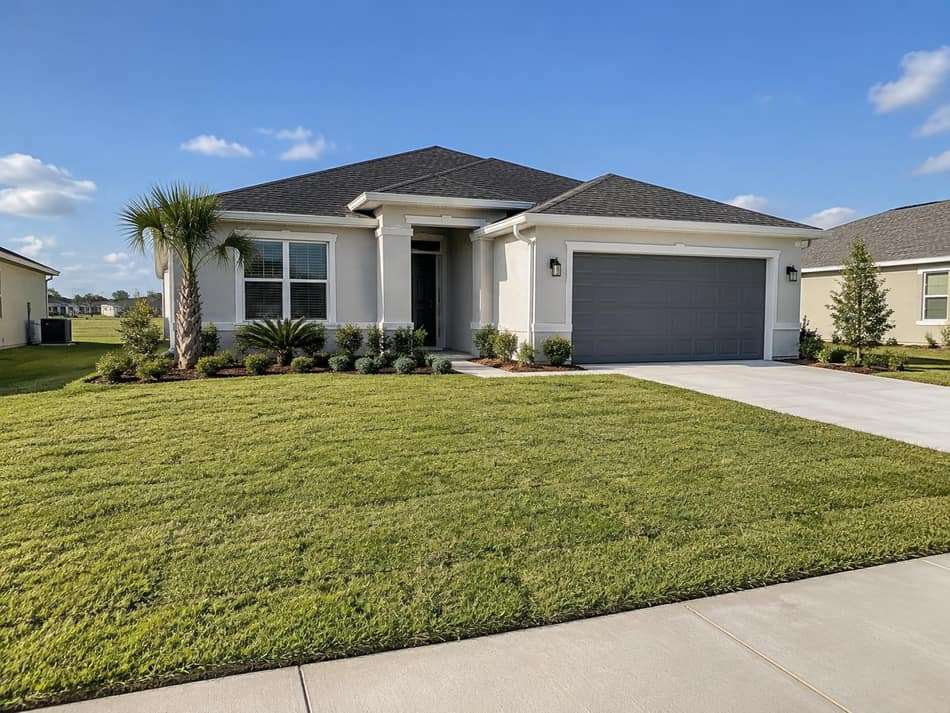
The first principle is to select plants that match a site's soil, light, water and climate conditions, as the program puts it. On the UF/IFAS Gardening Solutions page about the principles the advice is to look for low-maintenance plants that suit your site. In practice that means standing in the yard and noticing where the sun is hot all afternoon, where a roof overhang keeps a bed dry, where water stands after a storm, and where the soil is sand that dries out in a day or two.
Matching those conditions is what makes a yard low maintenance. A plant that suits its spot needs little help once it is established. A plant in the wrong spot needs extra water, extra fertilizer and extra pest control for as long as it lives. Group plants with similar needs together, so one watering or one trimming schedule works for a whole bed rather than for a single shrub.
Water efficiently on a once-a-week schedule
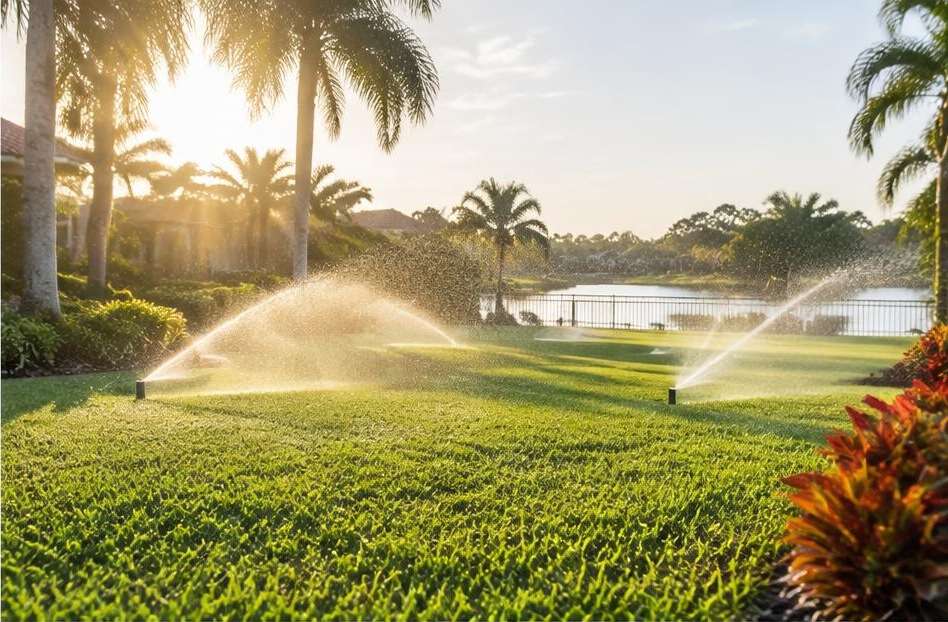
Polk County Utilities customers are limited to watering once a week, on a day set by the last digit of the street number, through March 2027. Our guide Polk County Watering Days & Irrigation Rules lists the days and hours. The Florida-Friendly principle fits that limit well. The UF/IFAS program says not to let the calendar tell you when to water, and its Gardening Solutions page advises watering a lawn only when at least half of it shows wilt. Check the lawn for folded or bluish-gray blades first, rather than running the system out of habit.
The program also says a rain shutoff device should be installed and maintained so the system does not run after rain. It recommends microirrigation for landscape beds and says to make sure the system is not watering paved areas. A quick look at the zones for spray on the driveway or sidewalk is part of this. If a head is misaligned, our guide How to Adjust Sprinkler Heads: Rotors and Spray Heads shows the fix.
New sod and new plantings are a different case, since their roots are not yet established. Our guide How Often to Water New Sod in Florida covers that, and the county or your city can confirm what the watering restrictions allow for new plantings.
Fertilize appropriately, and only when needed
UF/IFAS makes a plain point on this principle: before you fertilize, determine if it is really needed. County Extension offices offer soil testing at a nominal fee to measure nutrient levels, which beats guessing. Our guide How to Amend Sandy Soil in Florida: Compost and Tests explains how to take a sample and what the report does and does not tell you.
Polk County's ordinance restricts fertilizer near water and before heavy rain; some cities and nearby counties add a summer ban, so check your city. The UF/IFAS residents guide to the Polk County ordinance lists no fertilizer within 10 feet of any waterbody or wetland, no nitrogen or phosphorus fertilizer during severe weather or when rain is likely to exceed 2 inches within 24 hours, maximums of 1 pound of slow-release nitrogen or 0.5 pound of water-soluble nitrogen per 1,000 square feet per application, and no nitrogen or phosphorus for the first 30 days after seeding or sodding. Program advice adds to that: keep fertilizer off hard surfaces, and do not fertilize before a heavy rain.
Sandy soil makes these rules matter more, since water and dissolved nutrients move through it quickly. Nutrients that the plants do not take up can leach toward groundwater or wash toward the nearest lake.
Mulch, and the soil under it
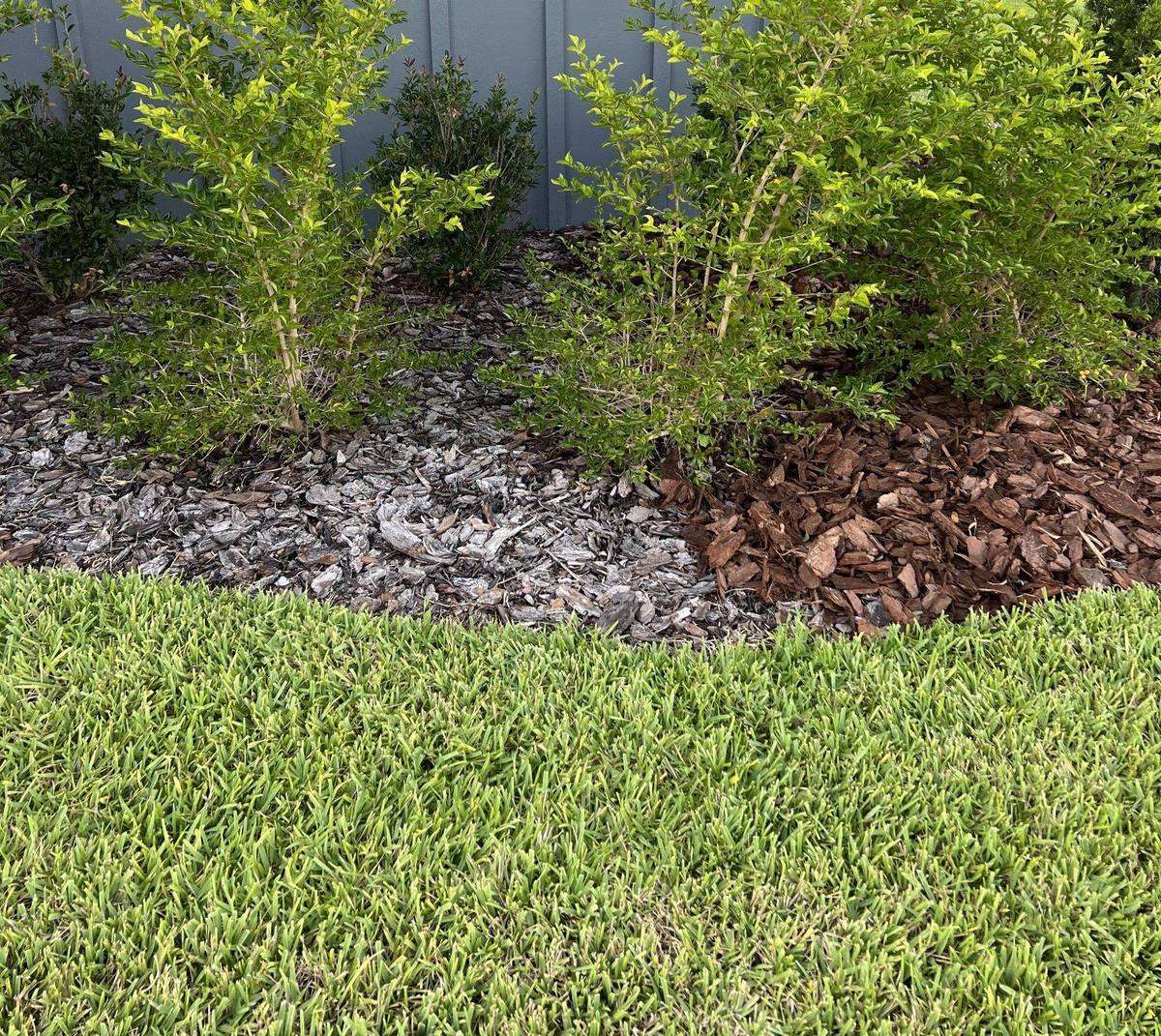
The program says mulch helps retain soil moisture, protects plants and inhibits weed growth. Those three jobs are especially useful on sandy ground and with a single watering day. UF/IFAS also says to avoid cypress mulch, which is often harvested from delicate wetlands, and points to alternatives such as melaleuca, eucalyptus and pine products. Our guide How Much Mulch Do I Need? Calculator for Florida Beds covers depth, types and the arithmetic for ordering.
Mulch sits on top of the soil, and the soil itself is often the limit in Central Florida. UF/IFAS describes most Florida soils as sand-based with little organic matter and low water- and nutrient-holding capacity. Adding compost to a bed before planting is one way to improve that, and the sandy-soil guide linked above goes through how much and how to work it in.
Wildlife, pests and yard waste
To attract wildlife, the program suggests supplying a source of water, such as a rain garden or bird bath, along with food plants, and limiting pesticide use or choosing the least toxic products so visiting animals are not harmed. None of this requires a wild yard. A bird bath and a few well-chosen flowering plants count.
For pests, UF/IFAS starts with prevention: select pest-resistant plants and put them in suitable locations. Scout the landscape often to catch problems early, treat only the affected plants, and follow all label instructions. This is the same approach that works for lawn insects. Treating one patch of a lawn early costs far less than treating the whole yard after the damage spreads.
Recycling yard waste starts at the mower. The program says to leave grass clippings on the lawn when you mow, and to use yard waste for composting, which it calls a sustainable way of creating organic fertilizer. Never dump clippings or other yard waste into storm drains or waterways. Polk County's ordinance goes further: clippings and vegetative material must never be swept, washed or blown onto any impervious surface, such as a driveway, street or sidewalk.
Reduce stormwater runoff
The eighth principle is about keeping as much rainfall and irrigation water on your property as you can. One UF/IFAS suggestion is to use porous materials, such as mulch and pavers, to reduce the amount of rainfall that leaves your landscape.
On a typical lot this comes down to a few habits. Keep beds mulched so water soaks in. Make sure the irrigation is not putting water on paved areas. Where a downspout or low spot sends water across the yard, a drain or a planted rain garden can route it to a planted area. Drainage work in a yard is a design decision, so a landscape professional can look at the grade before you dig.
Protect the waterfront
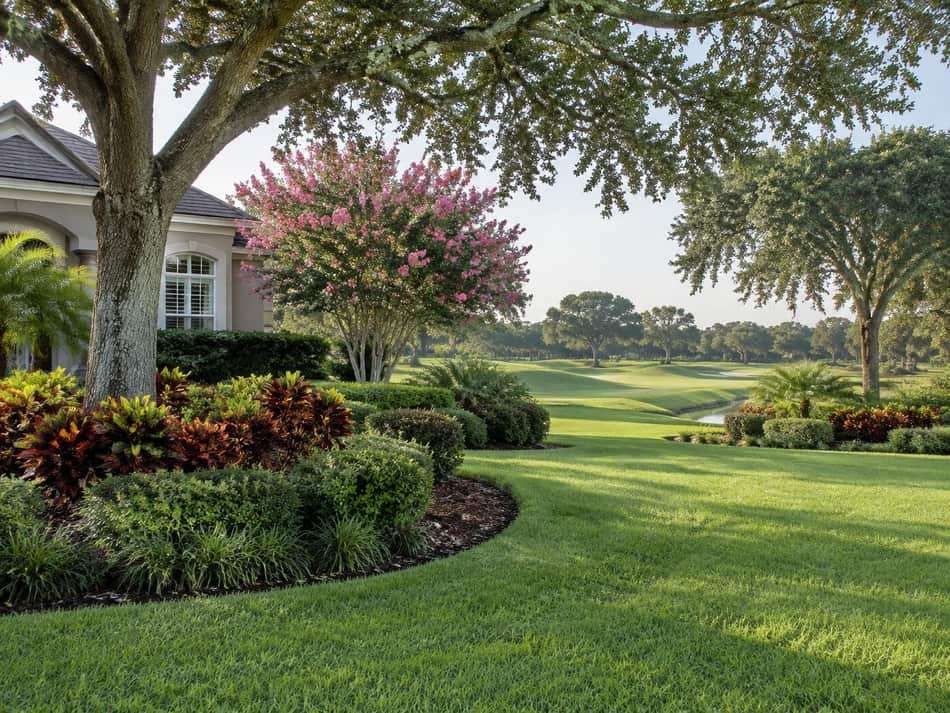
If your yard backs onto a lake, pond, canal or retention pond, the ninth principle is the one to focus on. UF/IFAS recommends a maintenance-free zone between the lawn or landscape and the water body: do not mow, fertilize or use pesticides in this area, which should be at least ten feet wide. The program says a low-maintenance zone along the waterfront is an important step to protect Florida's water quality.
The 10-foot figure lines up with the fertilizer setback in the Polk County ordinance, and the UF/IFAS residents guide says it strongly encourages a low-maintenance zone within that same 10 feet. Letting the strip grow, planted with suitable shoreline plants, trades a little mowing time for a yard that is less work. Ask your city, your HOA or the county before cutting back vegetation along a shoreline. We could not confirm local shoreline rules for this guide, and not every pond edge belongs to the homeowner.
Where to start
You do not need to redo the yard at once. A sensible order for a Polk County lot is to fix the watering first (rain shutoff, heads aimed at plants rather than pavement), then top up mulch, then test the soil before buying fertilizer, then replace one problem bed with plants that suit its conditions. Each step cuts upkeep without needing to be finished before the next.
If you want a second opinion on plant choices or bed layout, a landscape designer or the UF/IFAS Extension office in Polk County can walk through the options. Local landscape and lawn care companies are listed in our directory by city.
Sources
- UF/IFAS Florida-Friendly Landscaping: The 9 Principles
- UF/IFAS Gardening Solutions: Florida-Friendly Landscapes, the nine principles
- UF/IFAS Florida-Friendly Landscaping: Principle 2, Water Efficiently
- UF/IFAS Florida-Friendly Landscaping: Principle 3, Fertilize Appropriately
- UF/IFAS Extension Polk County: Residents guide to the Polk County fertilizer ordinance
- UF/IFAS: Preparing to Plant a Florida Lawn (LH012)
- Polk County: water restrictions
Written by the Polk County Landscaping editorial team. Rules and prices change, so check the linked agency before you act. Spotted a mistake? Send a correction.